
Sleep Through the Heat

Updated: Sep 1
How Summer Scent Becomes an Anchor for Rest, Mood, and Place

There is a certain kind of tired that only a heatwave produces. You go to bed exhausted and wake up even more tired than when you lay down. The top sheet is kicked to the floor, the room is too warm even with the window open, and your mind loops rather than settles. If this has been your summer so far, you're not imagining it, and you're not alone.
What's less obvious is that the air in your bedroom—not just its temperature, but its scent—plays a real role in how well you sleep through a heatwave and how you feel when you surface from it. At FERN+FELL, we believe a candle is more than fragrance for fragrance's sake. It's a small, deliberate piece of a place, brought indoors. Research on scent, sleep, and our attachment to landscape backs this up more than you might expect.
Why Hot Nights Wreck Our Sleep
Our bodies need to drop their core temperature to fall and stay asleep. Heat gets in the way of that. A 2025 study analysing 23 million nights of sleep, tracking data from over 214,000 people in China, found that for every 10°C rise in ambient temperature, the odds of insufficient sleep rose by over 20%. Deep sleep was affected most of all.
The European Insomnia Network noted that heat exposure during the night increases physiological stress. This stress is measurable in elevated heart rate and skin conductance, making it harder to drift off. Poor sleep during heatwaves has been linked to lower mood and reduced cognitive function.
So, if a heatwave is making your nights worse, your evening ritual matters more than usual. This is exactly where scent earns its place.

The Bedtime Case for Cedarwood and Geranium
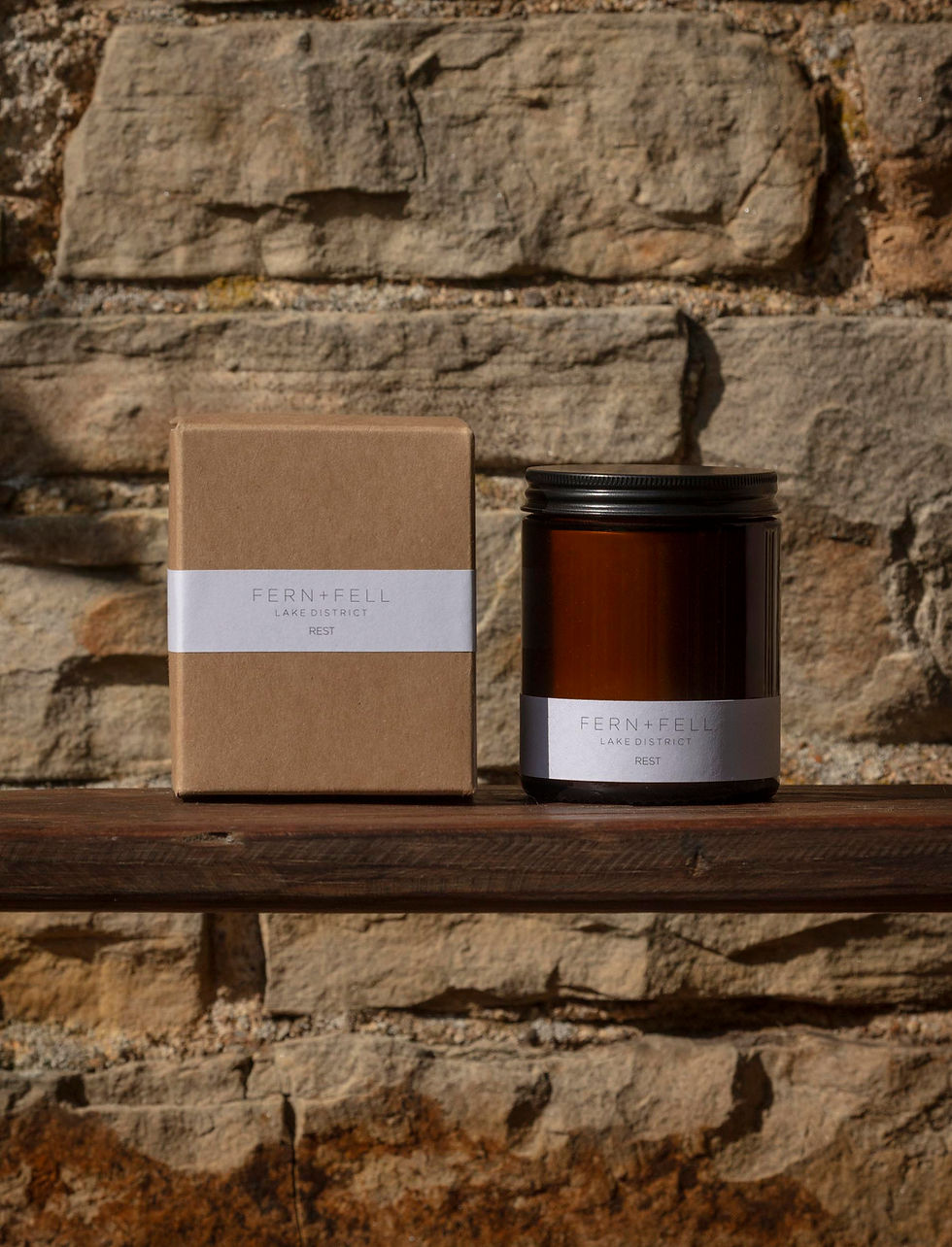
Cedarwood is one of the more quietly remarkable oils in our library. It forms the backbone of our REST | Cedarwood + Geranium blend. Its key active compound, cedrol, has been studied for its effect on sleep physiology. A foundational 1998 study found that inhaling the scent of cedar shortened the time it took participants to enter non-REM sleep. This is a genuine sedative effect, not just a relaxing smell. A follow-up pharmacological study found that cedrol inhalation increased parasympathetic nervous system activity—the ‘rest and digest’ state the body needs to wind down—while reducing heart rate, blood pressure, and respiratory rate.
Geranium works alongside cedarwood as an emotional stabiliser. It is well represented in the aromatherapy literature for easing tension and lifting low mood. In studies involving menopausal women, an eight-week course of geranium-based aromatherapy massage was associated with measurable improvements in mood and depression scores compared with massage alone. This is relevant for anyone whose summer nights are complicated further by hormonal heat sensitivity, hot flushes, or night sweats. That's why geranium also features heavily in our PAUSE blend, created by our founder Sharon for her own menopause experience.

Waking Up Brighter, Not Just Falling Asleep Easier
Here's the detail that often gets missed in conversations about sleep and scent: it isn't only about getting to sleep—it's about surfacing well too. A 2023 randomised crossover trial gave university students either bergamot oil or a placebo spray to use before bed and again on waking. The bergamot group reported significant improvements not just in falling asleep but specifically in ‘sleepiness on rising,’ ‘refreshing on rising,’ and overall sleep length. They also experienced reduced depression, anxiety, and stress scores.

That's the rationale behind pairing an evening blend with a morning one: our RESTORE | Bergamot + Mandarin is designed for that first hour of the day. Citrus oils generally have strong form here. One study found that simply diffusing orange scents into a waiting room measurably reduced anxiety and improved mood in patients compared with an unscented control. This is useful to remember next time a hot, restless night leaves you starting the day on the back foot.
The Science Behind Scent and Memory
This is where it gets interesting. It connects back to something we think about constantly at FERN+FELL: the relationship between scent, memory, and the landscapes that shape us.
Smell is unique among our senses. It's the only one with a direct neural route into the amygdala, the brain's emotional processing centre. This bypasses the more roundabout relay system that sight and sound take. This is why a scent can summon a feeling and the place that feeling belongs to, long before a single conscious thought arrives. Research from Brown University has shown that memories triggered by smell are reported as more emotional and provoke stronger physiological responses than the same memories triggered by a photograph or sound recording. For example, the smell of pine can instantly transport you back to a specific woodland experience.
Environmental psychologists call our emotional bond to meaningful landscapes ‘place attachment.’ It's not a soft concept; it's measurably linked to wellbeing. A study of over 2,000 people in Japan found that place attachment accounted for nearly a third of the positive effect that feeling connected to nature has on mental wellbeing. Other research has shown that thinking about a meaningful place activates the same regions of the brain involved in positive emotion and self-identity. This suggests that our attachment to place isn't just sentimental; it's neurologically real.

This principle underpins every FERN+FELL candle. We don't start with a fragrance brief; we start with a place, a feeling, and a memory. Whinlatter's wet bark and resin, the mineral sharpness of the Solway coast, and the thin, clean air at the top of a fell—this is how we build the scent. When you light one, you're not just perfuming a room. You're giving yourself a sensory anchor. This can pull your nervous system toward a place that means calm, clarity, or rest—even when the actual landscape is hundreds of miles away or simply inaccessible at 11 PM in a heatwave.
There's a parallel in the science of forest bathing, or Shinrin Yoku. Researchers have found that walking in forest environments lowers cortisol by over 12% compared with an equivalent urban walk. Much of the effect is attributed to phytoncides—the aromatic compounds, including pinene and cedrol, that trees release into the air. Our WOODLAND | Cedar, Eucalyptus, Black Spruce, Pine blend leans directly on this. Forest bathing inspired this scent experience. It's the closest thing we can offer to that clearing-of-the-mind effect of a walk under trees, without leaving your bedroom.

A Simple Ritual for Hot Nights
If your sleep has been suffering this summer, here's a small, evidence-informed ritual worth trying:
In the last hour before bed, light something grounding rather than energising. REST (Cedarwood + Geranium) is built for this. It's the one blend in our library designed specifically around the sedative, parasympathetic-calming research on cedrol.
If hormonal heat sensitivity is part of your picture—hot flushes, night sweats, or a racing mind at 2 AM—then PAUSE brings geranium together with frankincense, bergamot, and sage. These oils are associated with easing both anxiety and the emotional volatility that can come with hormonal change.
On waking, start your morning with citrus. Especially after a poor night, reach for RESTORE (Bergamot + Mandarin) rather than scrolling your phone.
For a midsummer evening when the windows are open and the air is heavy, SUMMER (Geranium, Basil, Orange) or a quiet hour with WOODLAND gives you the sensory equivalent of an uplifting garden or a walk under trees, without having to leave the sofa.
None of this replaces the basics of beating the heat—cooler bedding, ventilation, hydration, and recognising when extreme heat is a genuine health risk rather than just discomfort. This is especially important for older adults, infants, and anyone with chronic health conditions. But within that, scent is a small, real lever. It can't lower the thermometer, but it can lower you into your nervous system's rest state and into a place that feels like somewhere you belong.
That's really the whole idea behind FERN+FELL. A candle isn't a finishing touch. It's a way of carrying a landscape with you and giving your senses somewhere steady to land—heatwave or not.
Sources Referenced
Liu, S. et al. (2025). Climate warming may undermine sleep duration and quality in repeated-measure study of 23 million records. Nature Communications.
Keck School of Medicine, USC (2025). Study links rising temperatures to reduced sleep in U.S. adults. Environment International.
Altena, E. et al. (2023). How to deal with sleep problems during heatwaves: practical recommendations from the European Insomnia Network. Journal of Sleep Research.
Sano, A., Sei, H., Seno, H., Morita, Y., & Moritoki, H. (1998). Influence of cedar essence on spontaneous activity and sleep of rats and human daytime nap. Psychiatry and Clinical Neuroscience, 52(2), 133–135.
Kagawa, D., Jokura, H., Ochiai, R., Tokimitsu, I., & Tsubone, H. (2003). The sedative effects and mechanism of action of cedrol inhalation with behavioral pharmacological evaluation. Planta Medica, 69(7), 637–641.
Wakui, N., Togawa, C., Ichikawa, K., et al. (2023). Relieving psychological stress and improving sleep quality by bergamot essential oil use before bedtime and upon awakening: A randomized crossover trial. Complementary Therapies in Medicine, 77, 102976.
Lehrner, J., Eckersberger, C., Walla, P., Pötsch, G., & Deecke, L. (2000). Ambient odor of orange in a dental office reduces anxiety and improves mood in female patients. Physiology & Behavior, 71(1–2), 83–86.
Herz, R. S., Eliassen, J., Beland, S., & Souza, T. (2004). Neuroimaging evidence for the emotional potency of odor-evoked memory. Neuropsychologia, 42(3), 371–378.
Herz, R. S. (2016). The role of odor-evoked memory in psychological and physiological health. Brain Sciences, 6(3), 22.
Ramkissoon, H. (2019). The mediating role of place attachment between nature connectedness and human well-being: perspectives from Japan. Sustainability Science.
Frontiers in Psychology (2025). The relationship between place attachment and pro-environmental behavioural intentions: the mediating role of nature connectedness.
Morita, E. et al. (2007). Psychological effects of forest environments on healthy adults: Shinrin-Yoku as a possible method of stress reduction. Public Health, 121, 54–63.
This article is intended for general wellbeing interest and is not a substitute for medical advice. If you have ongoing sleep problems or are in a vulnerable group during extreme heat, please speak with a healthcare professional.


Comments