

When the clocks go back: Why we crave cosy, and how to bring nature indoors with scent


In short: When the clocks go back on Sunday 25 October, and as the evenings darken earlier, many of us feel an instinctive pull towards warmth, softness and home. We crave cosy and this craving is natural; nature guides us to this moment when we observe its processes. Small sensory rituals, such as a lit candle, a woody scent that reminds you of the outdoors, and a pause at the end of the day, can help a home feel calmer and more restful as the light fades.
The week the light really changes

This is the week each October when we all really notice, and feel a shift. You look up from the kettle and for us, we see the fellside has already gone amber. The bracken is copper, the sky is the colour of weak tea, and it's barely teatime.
Here in the Lake District, we feel the shift early and keenly. The days don't simply get shorter; they soften and slow. When the clocks go back, and the dark arrives an hour sooner, its as if someone has quietly turned the dimmer switch on the whole valley.
“For years I fought this shift. I would carry on as though it were still June, answering emails at my desk until I realised I was working in the dark with a cold cup of tea beside me. Aromatherapy and living more connected to nature have helped me embrace the seasonal shifts more easily - now I make a date to consciously seek fragrances that either anchor me to the season or support what I need most at the time.” Sharon, our founder
What changed for Sharon, was acceptance and always asking “What does nature do?” The realisation was the darker months aren't something she had to push through. They are a season with their own pace, these darker months are asking or guiding us to respond to them, not fight them.
Why do we crave cosy when the clocks go back?

We are creatures of light. Our bodies follow daylight to tell us when to wake, when to eat and when to wind down, and when the evenings draw in earlier, our routines and moods often shift with them. Many people notice they feel lower in energy, more inclined to stay in, and hungry for comfort.
This is so common that it has been given a name by many cultures. The Danish call it hygge, the Scottish call is coorie, and in Britain we simply say we're "getting cosy". The words differ but the instinct is the same: when the world outside gets darker, we look for warmth, softness and safety indoors, we crave cosy for wellbeing.
It isn't weakness or laziness. It's in our true nature, feeling this shift is an inbuilt biological response to the changing energy and purpose of the season. Travelling through the year at one pace means we all to often have to fight against natures rhythm - our environments are often overly lit in the dark because our working day demands longer hours not set to daylight.
How can a candle help us feel more at ease as the evenings darken?

We're careful about promises. A candle won't fix a hard season. If low mood lingers through the winter months or starts to affect your daily life, it's worth talking to your doctor. A candle is a comfort, not a treatment.
But we've learned, from making them and from the people who burn them, that a candle works on a few things that genuinely matter:
It marks a transition. Lighting a flame says the working day is over. Rituals like this help the mind shift gears ( especially if you work from home), and the clocks changing is the perfect moment to start one.
It lowers the light. A single warm flame softens a room in a way that overhead light or LED bulbs never will, and it feels more like dusk than a dentist's waiting room.
It brings scent into the picture. Scent is closely tied to memory and mood. A smell can carry you to a woodshed, a forest path or a childhood kitchen in a breath.
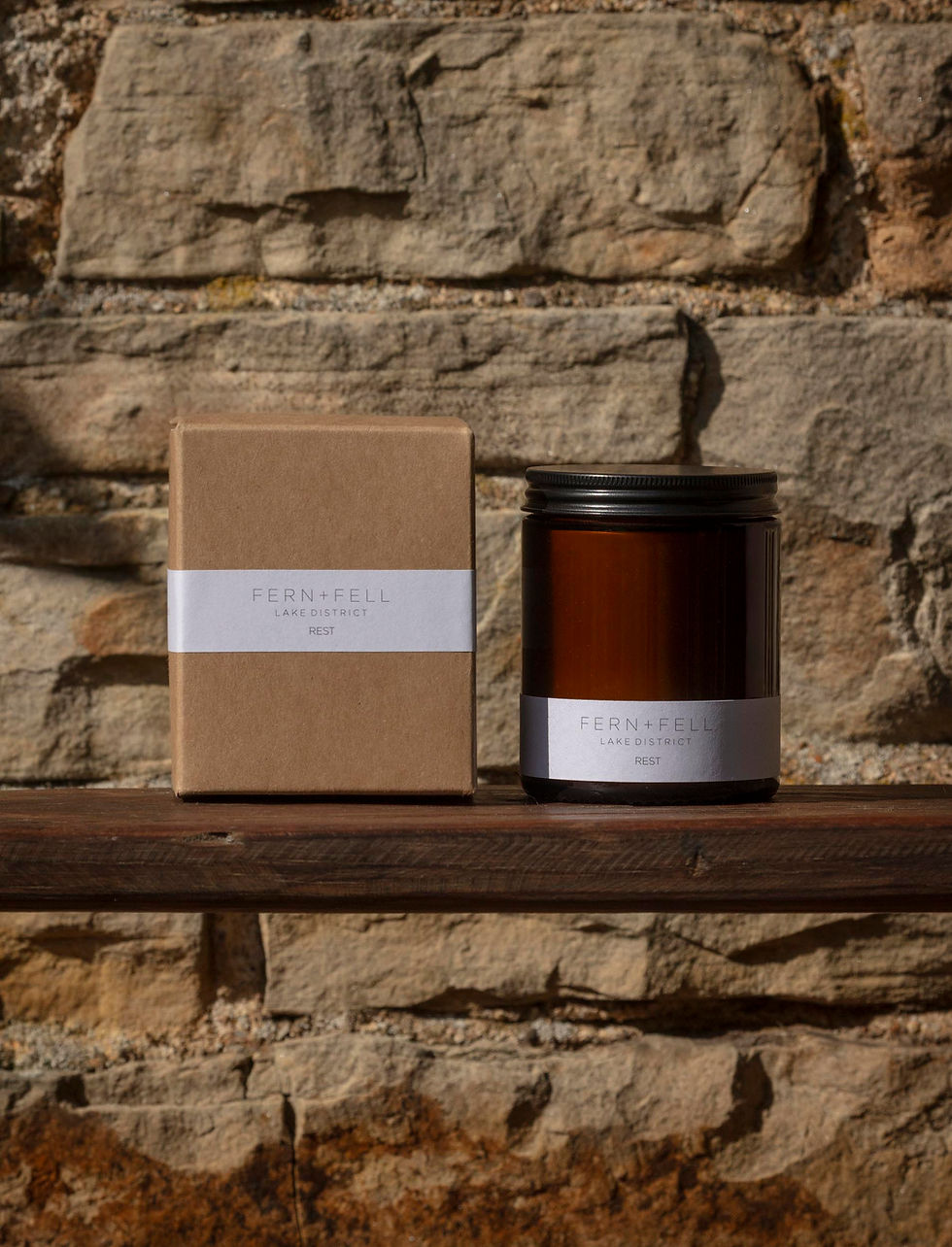
It slows you down. A flame is an ancient connection, a subconscious signal for us to slow down and be soothed. A flame invites you to sit, even for ten minutes, and do nothing in particular. Once of the reasons we moved our candle label to the bottom of the jar recently was so that more of the amber glow and flickering flame were visible.
That last one matters most. Cosy isn't a product, it's a pace.
Which scents suit the darker months?

When we blend our candles, we start outdoors and work inwards. We ask what the landscape smells like at an exact moment, then try to bottle the feeling rather than just the fragrance. There is no bergamot on the fells for example, but this is an essential oil that echoes the uplifting feeling you experience when the landscape offers you a feeling of awe and makes you feel small in the best way.
As the clocks change, these are the three blends from our Wellbeing collection, one from our seasonal collection, that all offer an extra layer of comfort in our autumn homes.
Autumn: nutmeg | cinnamon | clove
The scent of bruised and fragrant spices, make retreating indoors a pleasure. These warm spices help us find richness in the shorter days, as the wild year turns slowly towards rest. Designed to alleviate tension and to gently soothe.
Restore: bergamot and mandarin.
Think of the afternoon light coming through a south-facing window on a chilly day, the scent of citrus groves somewhere in memory connecting you to brighter days. Restore is ideal if the seasonal shift feels like a struggle – it lifts a room the way good light does, quietly and without announcement. It is the one to light at four o'clock, when the day is turning and you're missing the light.
Revive: eucalyptus | bay.
Picture a rocky fellside clearing above a woodland, scrubbed clean by the weather. After rain the air feels earthy and fresh, a little medicinal, and this scent clears space both in a room and in the mind. Light it in the morning and let the day open up or let it drift in with the steam of an evening soak.
Pause: orange | geranium| frankincense | bergamot | basil | sage.
Our founder, Sharon, created Pause to soothe her own menopause experience, turning to nature for moments of calm. It is a candle made as a permission slip: to set down what you've been carrying, pause and breathe. As the evenings close in earlier, it's the one for the moment you finally stop. Calming and soothing to all, not just mid-life women, but anyone who just need permission to pause.
All our essential oils are blended by hand, added to rapeseed + coconut wax, then hand-poured in the lake District. Crafted with ingredients that are vegan, cruelty-free and 100% natural.
Five small rituals to make a cosy home with nature

You don't need a renovation or a Pinterest board to create a cosy home. You can start where you are now with a few small habits that do most of the work:
Light the evening early. As soon as the light starts to go, switch off the overheads and bring on lamps and a candle. Don't wait for full dark, allow yourself to observe the transition from twilight to dark.
Give the hour a name. Call it "settling in", or "the lull", or anything you like. Naming it makes it real and makes it yours.
Bring in something from outside. A sprig of rowan, a few pinecones, a jar of copper bracken stems. Nature on the windowsill or in a vase keeps you connected to the season.
Choose one scent for this time. Repetition builds association. Burn the same scent for the same hour each evening, and your body will begin to recognise it as a cue to slow down.
Step outside before you come in. Even five minutes in the last of the daylight can help your mind and body feel the transition of day to evening.
Let the dark come in
This year, when the clocks change, try something different. Don't fight the early evening. Put the kettle on, light a candle, and let the dark meet your welcoming light.
The fells will still be there in the morning, and so will the light.


Comments